GEL-GE

CNC Router Buying Guide
📌Equipment Consultation, Specimen Cutting Reservation, On-site Testing:
You can contact us via phone, email, or Facebook Messenger.
📨 oscths@gmail.com
For more laser engraving videos, please visit the <Video Sharing> section on our official website or check out our <YouTube Official Channel>!
O.S.C CNC Router Buying Guide
Are you planning to buy a CNC router but not sure which model fits your needs?
This guide will help you choose the most suitable equipment based on your processing needs, material characteristics, budget, and application.
O.S.C offers free specimen cutting services. Feel free to send your materials for testing. Confirm the engraving effect before deciding to buy, so you can purchase with confidence!
- 1. What is a CNC Router / Computer Numerical Control Router
- 2. Common Application Areas and Materials for CNC Routers
- 3. O.S.C CNC Router Buying Points
- Q. Beginner: How to effectively compare 7 standard models and find the right equipment?
- Q. Advanced: How to choose spindle power and cooling method
- Q. Advanced: CNC router control systems and common operation software
- Q. Advanced: Drive systems and high-level communication choices
- Q. CNC router: Differences between stepper motors and servo motors?
- Q. What information to provide when inquiring about equipment? How to contact us?
- 4. CNC Router Frame Structure and Guide Rails
- 5. Optional Features and Accessories
- 6. Why Choose O.S.C - Quality and Technical Advantages of CNC Routers
- Further Reading
1. What is a CNC Router / Computer Numerical Control Router
CNC (Computer Numerical Control) routers precisely control motors and tools via computer commands, enabling high-precision cutting, engraving, slotting, and drilling on materials such as wood, acrylic, PVC, foam, and soft metals.
● High Precision and Stability: Excellent repeatability with minimal error, ensuring consistent product quality.
● Greatly Improved Efficiency: Fast processing speed, suitable for batch production, reducing labor costs.
● Wide Processing Range: Applicable to various materials and complex shapes, flexibly meeting different requirements.
2. Common Application Areas and Materials for CNC Routers
Materials:
Solid wood, MDF, acrylic, PVC, foam, KT board, leather, fabric, polystyrene, PTFE, as well as soft metals like aluminum and copper.
Application areas:
● Furniture and Interior Decoration: Precision cutting and carving of wood and acrylic for customized furniture components, decoration panels, and artistic carvings.
● Advertising Industry: Cutting and engraving of signage materials such as acrylic, PVC, and foam boards for making advertising signs, letters, and logos.
● Mold and Model Making: Precision carving of molds and prototypes using various materials for industrial and product design.
● Packaging and Display: Customized cutting of cardboard, foam, and plastic materials for packaging inserts, display stands, and exhibition props.
● Arts and Crafts: Detailed engraving and cutting for personalized gifts, artworks, and crafts.
● Education and Research: Use in schools and laboratories for model making and prototyping.
3. O.S.C CNC Router Buying Guide
O.S.C offers 7 standard CNC router models tailored to common needs in the manufacturing industry, providing flexible options for customers.
The following points help you quickly understand and preliminarily judge the suitable model for you.
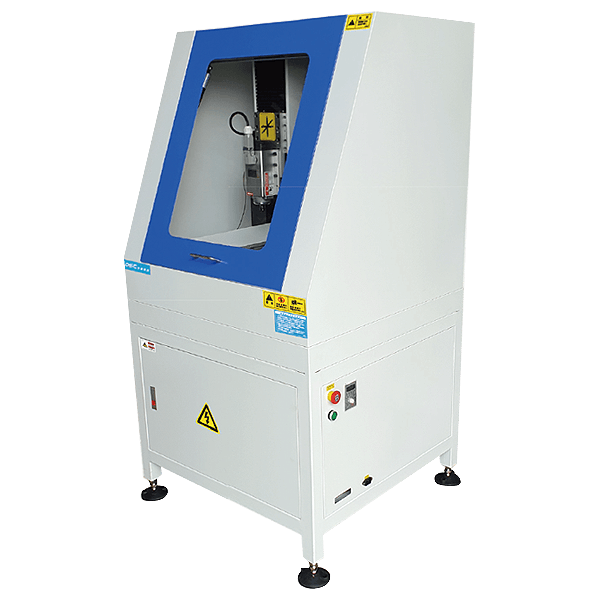
Economy Model
WorkingArea
300*300*150mm
Compact Model
Working Area
400*300*120mm
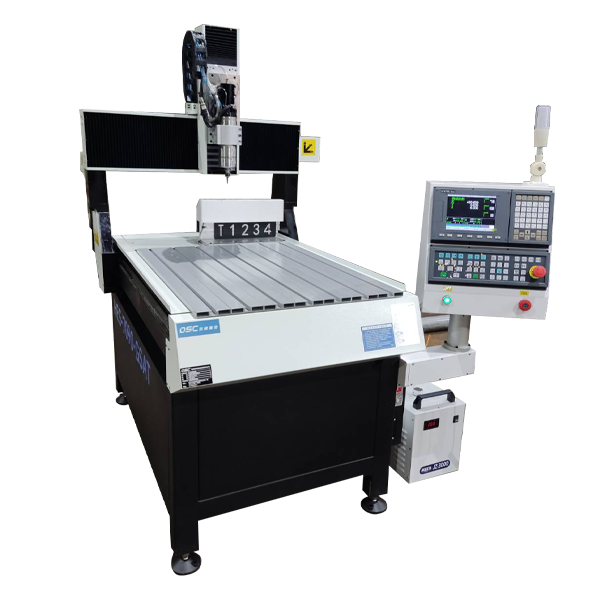
Mid-size Model
WorkingArea
1200*1300*150mm
Large Model
WorkingArea
1300*2500*170mm
Automatic Tool Changer
Switch between different tools without manual operation
Ideal for mid to large-scale continuous production lines
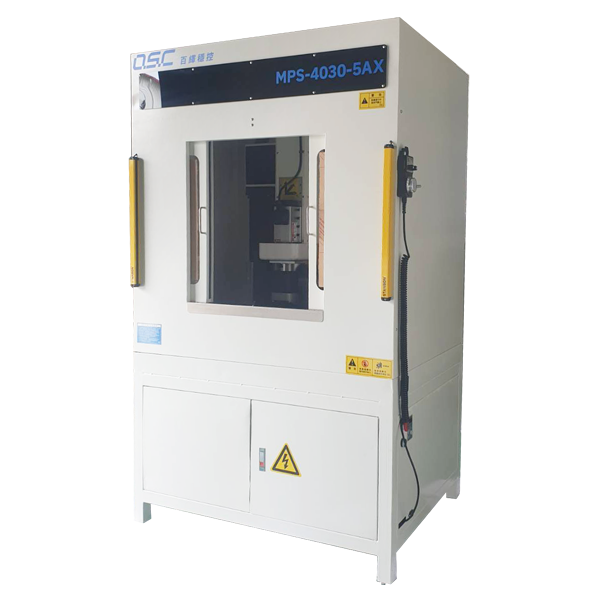
5-Axis Machine (Customizable)
Multi-sided cutting for 3D workpieces
Suitable for high-precision molds and complex curved surface processing
Styrofoam Cutting & Engraving
Developed specifically for Styrofoam cutting
Large size processing capability
Q. Getting Started: How to effectively compare the 7 standard models and find the right processing equipment?
1. Confirm processing materials and dimensions
First confirm the material type (wood, acrylic, styrofoam, soft metals, specimen cutting, etc.) and material size (maximum length, width, height required)
2. Processing requirements and production volume
● Required process or technique (relief / cutting, engraving / drilling / milling / deburring or compound processing)
● Prototype, industrial mass production, or precision machining
3. Working range and precision
● Match the maximum length, width, height of your workpiece to the ranges in the table below to select the suitable working area
💬 Recommendation: Industrial users may select a working range slightly larger than current needs for future expansion.
🔰 Note: The table provides only a preliminary comparison of equipment types; actual models may vary depending on precision requirements and selected accessories.
| Equipment Type | Working Range | Applicable Field | Special Features |
|---|---|---|---|
| Economy Model | 300*300*150mm, loading height 170mm | Beginners, educational entry, prototyping | MPS-3030 compact size, small footprint, easy to place on desktop or classroom, air-cooled spindle, easy to operate, future upgrade to EtherCAT communication available, affordable entry-level. |
| Compact Model | 400*300*120mm, loading height 150mm | Prototyping, studios, small industrial workpieces | Compact size, high rigidity cast aluminum body, integrated aluminum platform bed, high stability and durability. |
| Mid-size Model | 1200*1300*150mm | Studios, medium volume processing users | Rigid rack-and-pinion structure, capable of stable medium-range cutting; efficient for hardwood and plastics, good future expandability. |
| Large Model | 1300*2500*170mm, loading height 190mm | Industrial users, mass production users | ● Reinforced machine body and modified Y-axis structure to enhance overall rigidity ● Precision reduction gearbox for improved torque output and machining stability ● O.S.C patented deeply integrated control system for synchronized movement and speed ● Professionally tuned servo motors for greatly improved stability and reliability |
| Automatic Tool Changer | 700*900*250mm, loading height 250mm | Industrial users, mass production users | No manual operation needed, automatic tool change function available; optional for mid-to-large travel machines. |
| 5-Axis Machine | 400*300mm, loading height 500mm | Relief, 3D curved surface, precision machining | Custom machine; native 5-axis interpolation, deeply integrated control, professional servo tuning. |
| Styrofoam/Foam Cutting & Engraving | 1000*2000*760mm, loading height 1300mm | Dedicated to styrofoam and foam | Specifically designed for styrofoam/foam cutting and engraving, large working range, equipped with 3.7KW water-cooled spindle as standard. |
| Custom Machine | Standard or special working ranges | Specialized equipment | Custom-built equipment tailored to specific processing sizes and requirements; non-standard machines. |
Q. Advanced: Spindle Power and Cooling Method Selection
The spindle of a CNC router is a key component that affects machining efficiency and stability, mainly understood from the following two points:
1. Spindle Power
● Common power range is from 0.8kW to 6kW (customizable according to needs)
● Higher power provides better stability for machining harder or thicker materials, also suitable for long-duration and large-area machining.
🔰 Example: Common woodworking applications use spindles from 1.5kW to 6kW; hard plastics or soft metals typically require ≥ 1.5kW.
2. Cooling Method
● Air-cooled spindles: Simple structure, easy maintenance, suitable for light-duty machining or prototyping.
● Water-cooled spindles: High cooling efficiency, low operating noise, suitable for continuous long-time machining or high-precision tasks.
🔰 Not sure which to choose? Share your needs with O.S.C, and we will match the most suitable equipment for you.
Q. Advanced: CNC Router Control System and Common Operating Software
1. Control Cards
● Standard equipped with common controller brands such as ddcs, NcStudio, Syntec
2. Operating Software
● Compatible with common design and engraving software such as ArtCAM, VCarve, UG, CorelDraw.
🔰 Suggestion: Prefer options with Chinese interface, educational resources, and comprehensive technical support.
Q. Advanced: Drive System and High-end Communication Options
All O.S.C CNC routers can be flexibly configured with the most suitable drive system according to user needs (optional).
1. Introduction to Drive Motors
● Stepper Motors: Low cost, easy to operate, suitable for light loads.
● Servo Motors: High precision, less prone to missed steps, suitable for large-area high-speed machining.
2. Communication Methods
● EtherCAT real-time communication (optional): High speed, low latency, ensuring multi-axis synchronized interpolation accuracy.
● 5-axis interpolation calculation (optional): XYZ + A/C axes simultaneous movement, easily achieving complex 3D surface machining.
Q. CNC Router: Differences Between Stepper Motor and Servo Motor?
1. Stepper Motor
● Machining Materials: Wood, acrylic, foam board, PVC and other non-metallic soft materials.
● Applicable Range: Desktop CNC routers, entry-level CNC routers, light cutting or shallow engraving (not suitable for continuous mass production)
● Advantages: Low cost, easy maintenance, simple control, suitable for budget-limited or light processing users.
● Disadvantages: May miss steps during long-time operation or high-speed movement, causing engraving displacement. Processing accuracy is unstable.
2. Servo Motor
● Machining Materials: Wood panels, MDF, fiberboard, acrylic, foam, and other large size and harder materials.
● Applicable Range: Medium to large woodworking CNC routers, industrial-grade CNC (long-time, high-speed, continuous mass production), multi-axis linkage (automatic tool change, 4-axis relief engraving).
● Advantages: Does not miss steps under high-speed movement, stable precision.
● Servo motors have feedback and can automatically compensate errors, especially suitable for applications requiring high repeatability (e.g., mold engraving, panel structures).
● Disadvantages: Higher initial investment cost, more complex control system, requires certain maintenance capabilities.
Q. What Information is Needed When Inquiring About Equipment? How to Contact?
The more complete your requirement information is, the better our O.S.C team can precisely plan the most suitable solution for you.
1. Processing material and dimensions (maximum length, width, height)
2. Processing requirements (relief, cutting, drilling, or composite processing) and production volume
3. Precision requirements (machining tolerance ±0.02 mm, ±0.05 mm, etc.) or special processing needs
4. Equipment placement environment (footprint) / required power specifications / cooling water or compressed air needs
5. Whether special options are needed (automatic tool changer, vacuum adsorption, dust extraction, etc.)
6. Logistics and maintenance
● Additional warranty coverage and scheduled maintenance plan
※ All O.S.C equipment includes operation training and onsite installation.
4. CNC Router Frame Structure and Rails
A stable frame and rail design can greatly improve machining quality. O.S.C insists on "careful material selection" in structural design, strictly controlling everything from bed rigidity to rail configuration, ensuring the machine maintains stability and high precision during long-time machining.
● Bed Rigidity: Cast iron material is optimal, offering high stability and durability.
● Rails: Square rails (high rigidity) or round rails (budget considerations).
● Z-axis: Ball screw drive, balancing precision and durability.
5. Optional Features and Accessories
● Automatic Tool Changer
● EtherCAT Communication
● CCD Vision Recognition System
● Vacuum Suction Table
● 5-axis Interpolation
● Oil Mist Cooling
● Dust Extraction System
● Laser Positioning
6. Choose O.S.C, Gain Quality and Technical Advantages of CNC Routers
Rich Customization Experience
O.S.C has accumulated extensive CNC customization experience in the industrial automation field. Whether for special sizes, processing needs, or workflow integration, we provide tailor-made complete solutions. Custom development is our specialty to help customers build optimal solutions and improve efficiency.
Integrated Drive and Control System
A unique technology of O.S.C! The controller and servo driver are highly integrated. Through O.S.C’s proprietary unified motion platform, path planning, speed feedback, and error compensation are handled uniformly, ensuring stable coordination of multi-axis systems and achieving high-speed and high-precision machining performance.
Professional Machine Calibration
O.S.C’s exclusive advantage! Each machine is finely tuned by O.S.C engineers for inertia ratio, PID, resonance suppression, and other details. Complete tuning reports and subsequent optimization suggestions are provided to ensure the equipment performs at peak motion efficiency and stability under different load conditions.
Comprehensive Warranty and Support
● Customized delivery schedules: Planned according to production processes and operating habits, ensuring delivery within the shortest reasonable time.
● Repair / Warranty / After-sales service: Starting from Taichung, serving all over Taiwan, professional technicians personally maintain and service, provide operation training and spare parts supply to ensure long-term machine stability, giving you peace of mind without worries of orphaned equipment.
Further Reading
🔰 [Advanced] Introduction and Selection of CNC Router Transmission Methods